
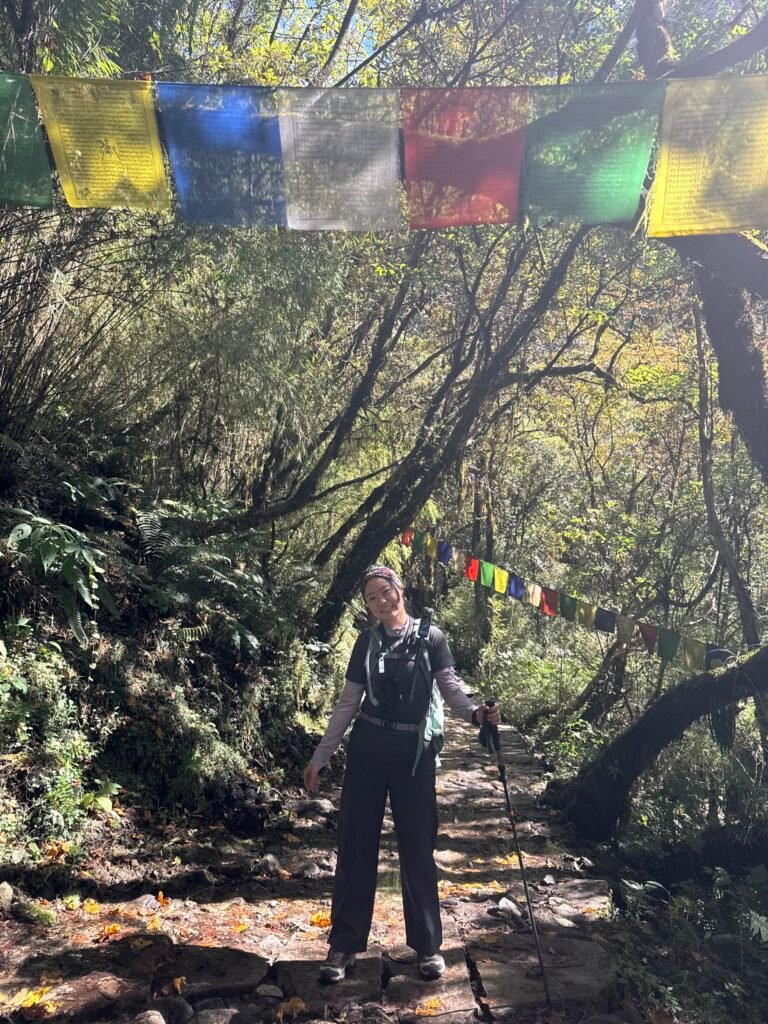
If you’re wondering what to pack for a 6-day Annapurna Base Camp trek, this is the packing list I personally used for my trek to Annapurna Base Camp (ABC) at 4,130m from 20–25 October 2025.
Packing for Annapurna Base Camp can be tricky because you need to prepare for warm lower altitude trails, rain, wind and much colder temperatures higher in the mountains—without carrying your entire wardrobe on your back.
For my trek, I carried a 35L daypack myself and hired a porter to carry around 12 kg of my other belongings. Was everything essential? Definitely not. But this is what I actually brought, what I used, and what helped make my 6-day ABC trek more comfortable.
🎒 1. Backpack & Core Trekking Gear
My main trekking setup included:
- 35L backpack
- Backpack rain cover
- Trekking poles – With all the stone steps, steep climbs and descents, they gave me extra stability and reduced strain on my legs.
- Headlamp – Since I wasn’t planning to trek at night, it was mainly an emergency backup. Still, I wouldn’t leave it behind—mountain itineraries can change unexpectedly.
- Emergency blanket
- Safety whistle
👕 2. Clothing System
Instead of relying on one thick jacket, I packed multiple layers so I could adjust throughout the day. Temperatures can feel completely different between the lower villages and the higher sections approaching Annapurna Base Camp.
Base layers
I brought:
- Heattech ×2
- Merino T-shirts ×2
- UV-protection long sleeve tops ×2
I especially like having merino shirts for multi-day trekking because they could be reworn more easily than regular cotton clothing.
Avoid relying heavily on cotton for trekking. Once wet with sweat or rain, it dries slowly and can make you feel cold.
Mid layers
For insulation, I packed:
- Fleece ×2 – worked well while walking in cooler conditions
- Down jacket ×1 – useful when temperatures dropped further
Outer shell
I brought:
- Waterproof and windproof Gore-Tex jacket ×1
Outer layer doesn’t necessarily need to provide lots of warmth. Its main job is to protect you from rain and wind, while base and mid layers provide insulation.
Trekking bottoms
I packed:
- Trekking pants ×4
- Heattech leggings ×1 – worn underneath trekking pants when it became colder
Others
I also brought:
- Underwear ×4
- Sports bras ×4
- Dry bags – useful for separating clothing and protecting important items from rain or moisture inside backpack
🥾 3. Footwear
My footwear setup was simple:
- Trekking shoes
- Slippers/sandals – mainly for evenings after trekking. Being able to take my trekking shoes off after hours of walking felt amazing.
- Hiking socks ×4
Trekking footwear is something I would never recommend trying for the first time on the ABC trail.
Break your shoes in before Nepal and make sure you have enough room around your toes, especially for descents.
💧 4. Food & Hydration
I carried:
- Water bottles + hydration bladder — around 3L total capacity
- Electrolytes – replace the fluids and salts you lose more easily at altitude, supporting hydration, muscle function and reduce dehydration related cramps, weakness, and dizziness.
- Energy gels – useful as an easy-to-carry source of energy when you don’t feel like eating much
- Chocolate
- Sweets
- Snack bars
- Coke – I personally like drinking Coke during long trekking days because the sugar provides quick carbohydrates, while the caffeine gives me a small energy and alertness boost when I’m tired.
- Thermos flask for hot water
How much water should you carry on ABC?
You don’t necessarily have to start every morning carrying the full 3 litres.
Your required amount depends on the route, weather and where you can refill. Having around 3L of total carrying capacity simply gave me flexibility.
Hydration is particularly important at altitude.
💊 5. Health, Medication & First Aid Kit
As a doctor, this was naturally one of the sections I paid more attention to.
My trekking medical kit included:
- My personal medication
- Acetazolamide
- Painkiller
- Anti-nausea/vomiting medication
- Gastric medication
- ORS — oral rehydration salts
- Antihistamine
- Probiotic
- Salonpas – for muscle pain
- Vaseline – to reduce friction on foot pressure points
- Mosquito repellent – didn’t use much
- Knee guard
Basic first aid
I also carried:
- Plasters
- Antiseptic wipes
- Bandage
Having a small personalised trekking first-aid kit can be very useful when you’re away from medical facilities.
If you take prescription medication, bring enough for the entire trip plus a small buffer.
And if you’re considering acetazolamide for altitude sickness prevention, discuss whether it is appropriate for you with a qualified healthcare professional. It can reduce the risk of acute mountain sickness in appropriate situations, but it does not replace sensible ascent and recognising altitude symptoms.
🧼 6. Hygiene & Personal Care
My kit included:
- Wet wipes
- No-rinse body cleansing foam
- Tissue/toilet paper
- Hand sanitiser
- Toothbrush + toothpaste
- Sunscreen
- Lip balm
- Quick-dry towel
- Eye drops + daily contact lenses
- Lotion
- Pantyliners
- Facial cleanser + Toner
- Comb
Sunscreen is especially important. Don’t underestimate sun exposure just because the weather feels cool.
Higher altitude environments can expose you to significant UV radiation, so I kept sunscreen, outdoor sunglasses and lip balm easily accessible rather than buried at the bottom of my bag.
If you wear contact lenses like me, eye drops can also be useful because the mountain environment can feel quite dry and windy.
🔋 7. Electronics
My electronics setup was:
- Phone
- 2 × 10,000 mAh power banks
- Charging cables
- International travel adapter
- Camera
I brought 20,000 mAh of total powerbank capacity because I use my phone and camera extensively for travel content.
If you’re mainly using your phone for occasional photos and navigation, you may not need as much power capacity.
I also recommend downloading important stuffs such as maps, bookings, insurance documents and itinerary information before starting the trek.
📄 8. Documents & Essentials
I carried:
- Passport / ID
- Cash – I kept enough cash available for expenses along the trail as well as unexpected situations.
- Travel insurance details – Make sure your travel insurance is suitable for trekking at the altitude you planned to reach. Check the altitude limit in the policy rather than assuming the travel insurance automatically covers the trek.
🌧️ 9. Weather Protection
Mountain weather can change quickly, so this was one of the bigger sections of my packing list.
I brought:
- Poncho / raincoat
- Waterproof pants cover
- Sunglasses
- Outdoor sports glasses – I particularly wanted eye protection suitable for strong sunlight, wind and snowy conditions at altitude.
- Hat/cap
- Beanie
- Crampons – if snow conditions required them
- Lightweight umbrella
- Neck gaiter
- Gloves
- Face mask – this isn’t necessary. A neck gaiter can serve the same purpose, protecting your face from dust, wind, and cold.
- Headband
- Heat packs
Do you need crampons for Annapurna Base Camp?
Not necessarily.
It depends heavily on the season and the trail conditions. I included them as snow equipment rather than something every ABC trekker needs year-round.
🛏️ 10. Sleep & Recovery
For sleeping, I brought:
- Sleeping bag – If required
Sleep becomes increasingly important as your trekking days accumulate.
Even if your accommodation provides bedding, having the appropriate sleeping setup for the expected temperatures can make a huge difference to how well you recover before the next day’s hike.
My Complete 6-Day ABC Packing List
Here’s the condensed version if you want to screenshot it before packing:
🎒 Trekking gear: 35L backpack, rain cover, trekking poles, headlamp, emergency blanket, whistle
👕 Clothing: Heattech ×2, merino shirts ×2, UV tops ×2, fleece ×2, down jacket, Gore-Tex shell, trekking pants ×4, Heattech leggings ×1
🥾 Footwear: Trekking shoes, sandals, hiking socks ×4
💧 Nutrition: Water system, electrolytes, gels, chocolate, sweets, bars, coke, thermos
💊 Medical: Personal medications, altitude medication if prescribed/appropriate, fever medication, anti diarrhea medication, painkiller, nausea/vomiting medication, gastric medication, ORS, antihistamine, basic first aid
🧼 Hygiene: Wet wipes, no-rinse cleanser, toilet paper, sanitiser, toiletries, sunscreen, lip balm, towel, eye drops
🔋 Electronics: Phone, 2 × 10,000 mAh power banks, cables, travel adapter, camera
📄 Essentials: Passport/ID, cash, trekking-appropriate insurance
🌧️ Weather protection: Rain gear, waterproof pants, sunglasses, hat, beanie, gloves, neck gaiter, heat packs
🛏️ Sleep: Sleeping bag if required
What I Learned From Packing for Annapurna Base Camp
The biggest lesson from my 6-day ABC trek was that you don’t need endless individual outfits—you need a good layering system.
Your clothing should allow you to move between: warm trekking → windy conditions → rain → cold evenings → high-altitude temperatures without needing to completely change your outfit every few hours.
If you’re using a porter like I did, you have a little more flexibility with comfort items. If you’re carrying everything yourself, I would reduce duplicate clothing considerably and prioritise lightweight, quick drying pieces.
I’d spend weight on the things that genuinely matter:
good footwear, rain protection, warm layers, sun protection, hydration capacity and a small medical kit.
Those made much more difference to my experience than having another outfit.
FAQ: Packing for Annapurna Base Camp
What size backpack do I need for a 6-day ABC trek?
I personally used a 35L backpack as my daypack because I had a porter carrying approximately 12 kg of my other belongings.
If you’re carrying everything yourself, you’ll likely need more capacity depending on your packing style and whether you need to carry a sleeping bag.
Do I need a down jacket for ABC?
I brought one and considered it an important part of my cold weather layering system, especially for the higher sections of the trek and evenings.
How many clothes do you need for a 6-day ABC trek?
I packed several changes, including four trekking pants, four sets of underwear and multiple base layers. You can pack considerably lighter if you’re comfortable rewearing quick-drying or merino clothing.
Do you need trekking poles for ABC?
They’re not mandatory, but I found them very useful. There are plenty of climbs, descents and stairs along the route.
What should be in an ABC medical kit?
At minimum, consider some basic travel medication, simple wound-care supplies, pain relief and medication relevant to your own medical history. Altitude medication should be considered individually rather than automatically taken by every trekker.
Final Thoughts
Packing for Annapurna Base Camp isn’t about bringing everything you might possibly need.
It’s about being prepared for the conditions that actually matter: altitude, cold, rain, sun, long trekking days and limited access to your normal comforts.
This was what I packed for my own 6-day ABC trek, and having a porter carry part of my luggage meant I could afford a few more comfort items than someone travelling completely self supported.
If you’re planning your own ABC adventure, use this list as a starting point and adjust it according to your season, itinerary, trekking experience and whether you’re hiring a porter.
Also, good luck with your ABC trek! 🏔️ Stay safe, take it slow, and enjoy every step of the journey.

Thank you for sharing your experience. I am going to ABC in late october 2026. Haveing planning this journey for years.
You’re most welcome, have fun, enjoy and stay safe during trekking!
Where can I find the glasses that you are wearing during your ABC trekking.
Any suggestions?
I have a pair of DYNAFIT outdoor sunglasses, so far I like it, perhaps you can check out this brand!